This article will...
- Explore PEAK 35™ and how Millennials’ growing wealth creates a unique opportunity for financial advisors.
- Look at key Millennial segments—Wealth builders, wealth inheritors, and women.
- Show how values alignment, transparency, and hybrid advisory models can help build trust and confidence.
PEAK 35TM is a historic moment when equal numbers of Americans turn 35 in parallel with Baby Boomers turning 65 years old, creating a generational bridge. Millennials are quickly amassing wealth and are increasingly seeking value-aligned guidance from financial advisors. This creates unprecedented opportunity for financial professionals who understand the Millennial moment.
Despite this fast-paced growth, there are differentiators within the Millennial generation – specifically, their financial circumstances and priorities - that require fundamentally different strategies to cultivate trusting relationships. Creating a personalized approach that addresses the needs of each group can help ensure a long-term pipeline of clients.
Find out how to incorporate actionable strategies that can help to capture and retain Millennial clients through values-based, hybrid advisory approaches.
Realities of Millennial financial planning
Millennial wealth is outpacing previous generations
Overall Millennial wealth is outpacing previous generations, but there is a clear gap between those who are building wealth independently and those who are set to inherit. All of these variations within a single generation require a personalized financial planning approach tailored to the specific client.
The wealth builder segment
Reliant on their own planning to support their goals, the wealth builder segment's financial priorities include managing debt while investing for the future as they achieve key life milestones. This Millennial cohort, representing 1/3 of this generation, faces a level of uncertainty around their future finances. The majority of wealth builders does not expect to receive an inheritance, while 9% are unsure of whether or not they'll receive one.

The wealth inheritor segment
Those in the wealth inheritor segment, nearly 7 in 10 (67%) of Millennials, are further along in their financial journey and have more clarity regarding their future. 41% have confirmed they're receiving an inheritance, while 26% anticipate it. The most common forms of inheritance are cash (71%), real estate (46%), and investment assets (41%).
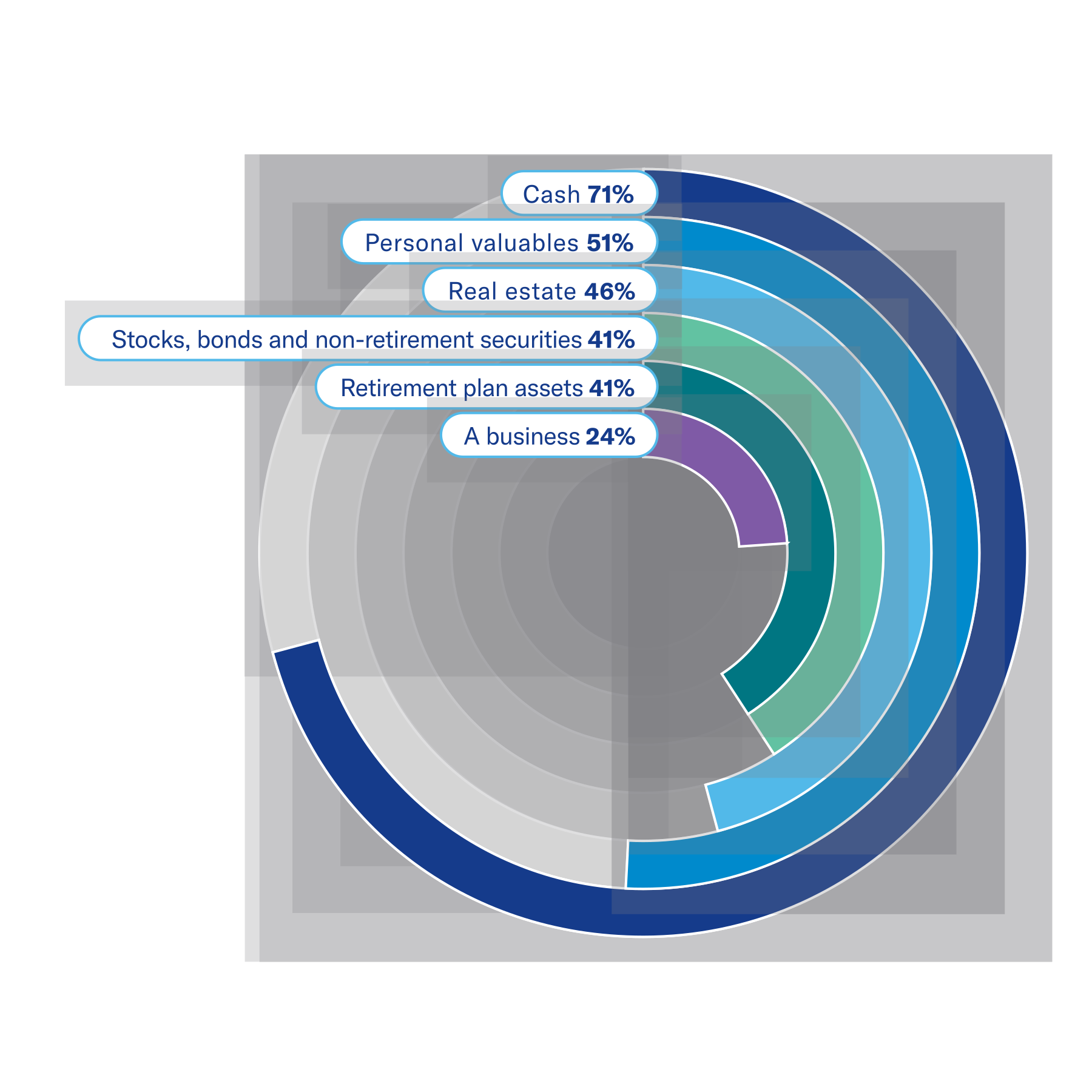
Still, in many cases, the anticipated inheritance will not be substantial enough to eliminate the recipient’s need to earn, save and invest. Additionally, this cohort is in need of careful financial planning and advice because even an anticipated inheritance can be substantially impacted if a family member is faced with unexpected healthcare costs, longevity needs, or simply poor management of their estate. Expecting a financial windfall and actually receiving it are two different things and it’s important that these individuals plan for their own financial security independent of their anticipated inheritance.
This group benefits from the knowledge of what to expect which comes from direct conversations within their family. Of those who have had open discussions with parents and grandparents around estate planning, two-thirds have a financial advisor. This generational inclusion is constructive for Millennials and brings greater transparency allowing them to focus on growing and protecting their own financial futures.
The gender wealth dynamic
Millennial women are similarly attaining a new sense of financial independence, thanks to gains in financial literacy and career progression. Slightly over half (51%) of women identify as their family's primary breadwinner. But their perception of their ability to manage their wealth lags, with 71% saying they feel confident in their financial decision making, compared to 85% of men. However, Millennial women recognize the importance of personal guidance from a financial advisor they can trust, and working with one increases women’s confidence level to 84%.
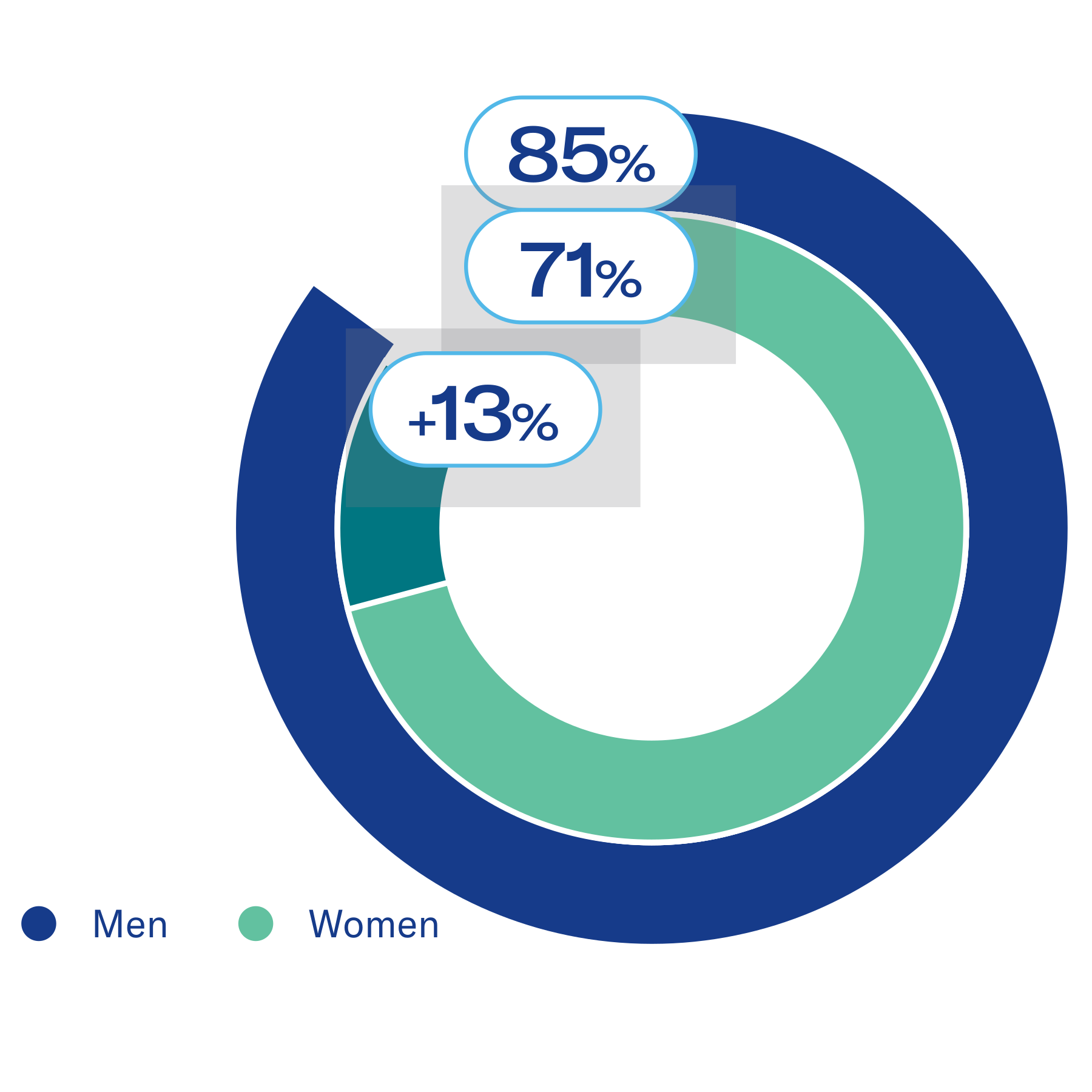
Millennial women (51% primary breadwinners) achieve confidence levels equal to men when working with an advisor.
These empowered women are set to play an unprecedented role in how assets are stewarded, both in the near-term and long-term. The first wave comes in the form of pre-retiree surviving spouses, who are stewarding familial wealth and are estimated to manage $54 trillion through 2048.1 They'll have a large amount of autonomy over wealth decisions impacting the next generation and they value professional guidance as they work to create their own financial legacy.
What Millennials expect
What do all of these shifting dynamics mean for advisors catering to Millennials and their financial planning needs? It's vital to be mindful of their values while also instilling transparency, trust, and tailored advice into every interaction. Here's what that looks like.
The non-negotiable foundation
Millennials identify two primary priorities when working with a financial advisor: values and relationships.
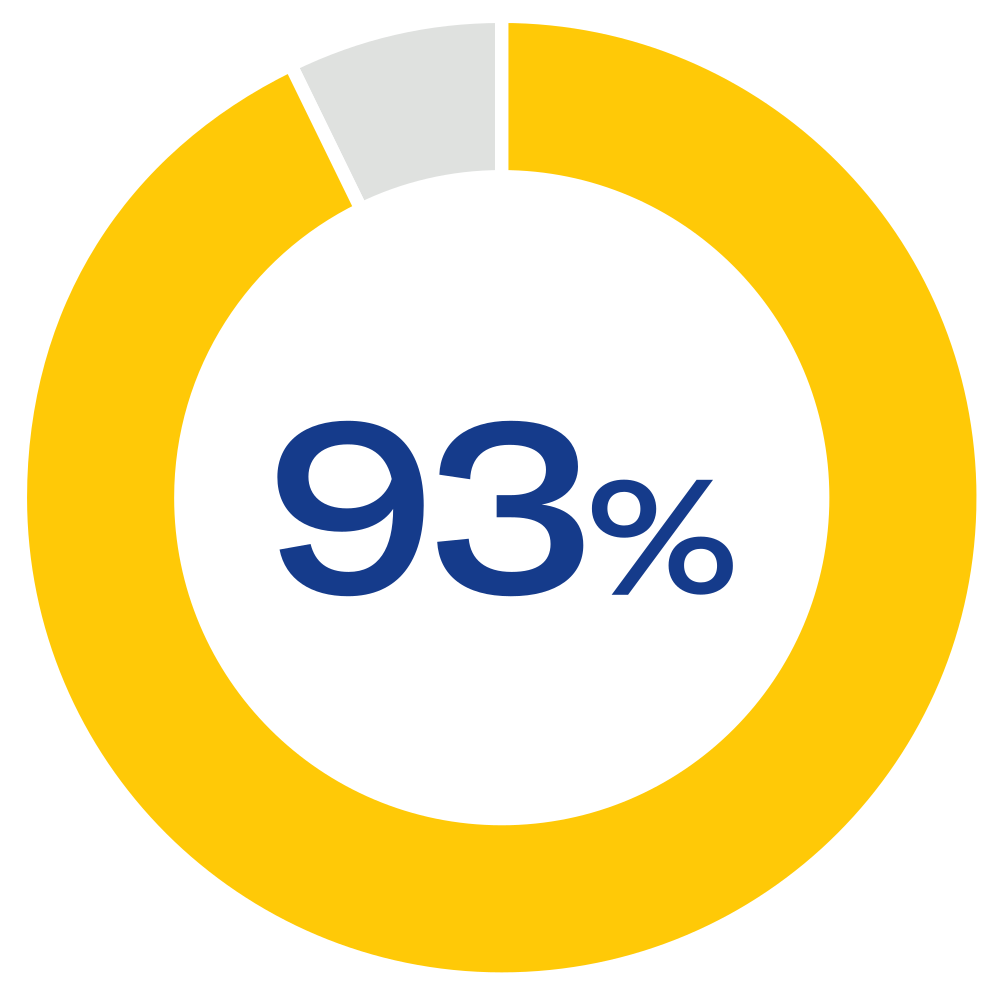
An incredible 93% prioritize values alignment with advisors. This can end up being a deal breaker, with 32% of Millennials saying they would replace their advisors if their values are not aligned. Family relationships also matter. 87% factor existing family advisor relationships into retention decisions.
Key financial advisor attributes:

Service delivery preferences
How advisors deliver their services are also important to Millennials. Despite being a digital-first generation, the vast majority (7 in 10) still value personal relationships.
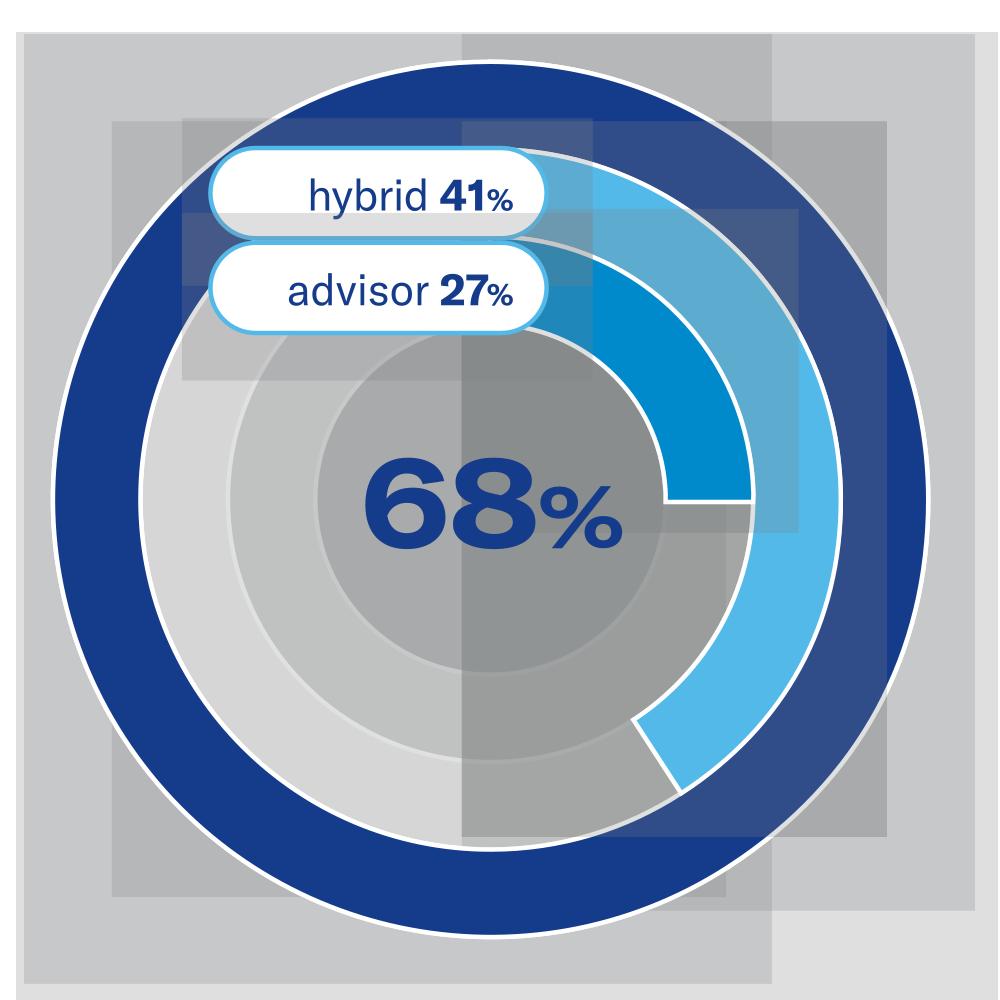
68% want human guidance (27% exclusively, 41% hybrid with digital tools)
Only 1 in 4 (27%) prefer a purely digital advice approach to planning
The confidence multiplier effect
The biggest advantage advisors bring to the table is a major boost in financial confidence. Savvy Millennials are 2x more confident in financial decision making, which is of significant value to both the wealth builder and inheritor segments.

Additionally, family advisor relationships can be used to facilitate inheritance conversations and discussions around strategies for preserving familial wealth. This not only helps Millennials feel confident in their future finances, it also strengthens relationships and sets up the family advisor as an intergenerational resource.
Seizing the PEAK 35TM moment
Millennials entering their prime wealth-building years represent the largest, most educated generation in history. Those expecting an inheritance will steward unprecedented wealth transfers, while wealth builders not anticipating a bequest will need foundational guidance.
Financial advisors who adapt now - embracing transparency, values alignment, and hybrid service delivery - will establish relationships that build sustaining practices for decades. Equitable's recent whitepaper, PEAK 35TM: Guiding a new generation of wealth, goes even further in depth on the driving forces behind Millennials' growing wealth.
Equitable is the brand name of the retirement and protection subsidiaries of Equitable Holdings, Inc., including Equitable Financial Life Insurance Company (Equitable Financial) (NY, NY), Equitable Financial Life Insurance Company of America (Equitable America), an AZ stock company with an administrative office located in Charlotte, NC, and Equitable Distributors, LLC. Equitable Advisors is the brand name of Equitable Advisors, LLC (member FINRA, SIPC) (Equitable Financial Advisors in MI and TN).
©2026 Equitable Holdings, Inc. All rights reserved.
GE-8701251.1 (01/2026) (Exp. 01/2030)